

Channel Reactor
Real-time digital RF simulation for validating RF system performance before field deployment.
Channel Reactor is Ether Form’s real-time digital RF simulation capability for reducing integration risk, accelerating debug cycles, and helping teams evaluate system behavior earlier -before scarce field events or expensive flight testing.
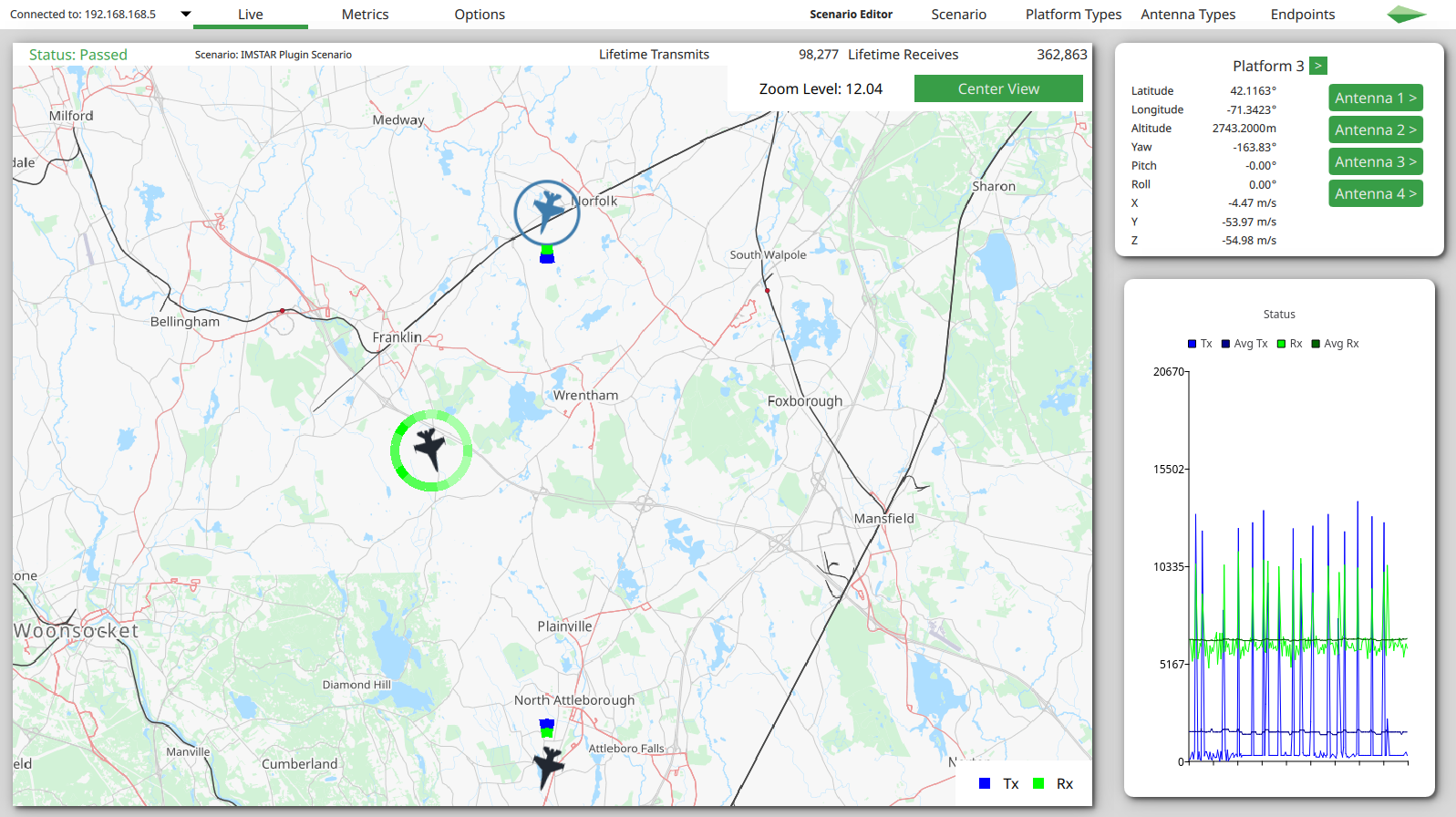
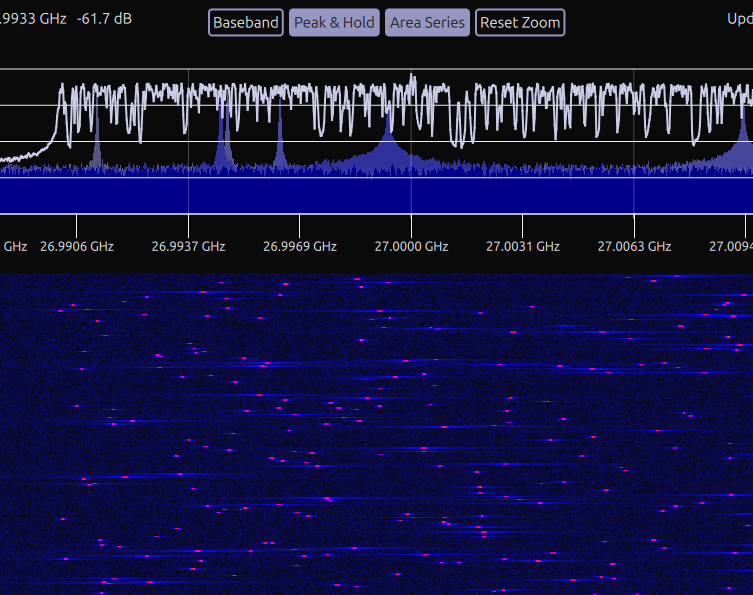
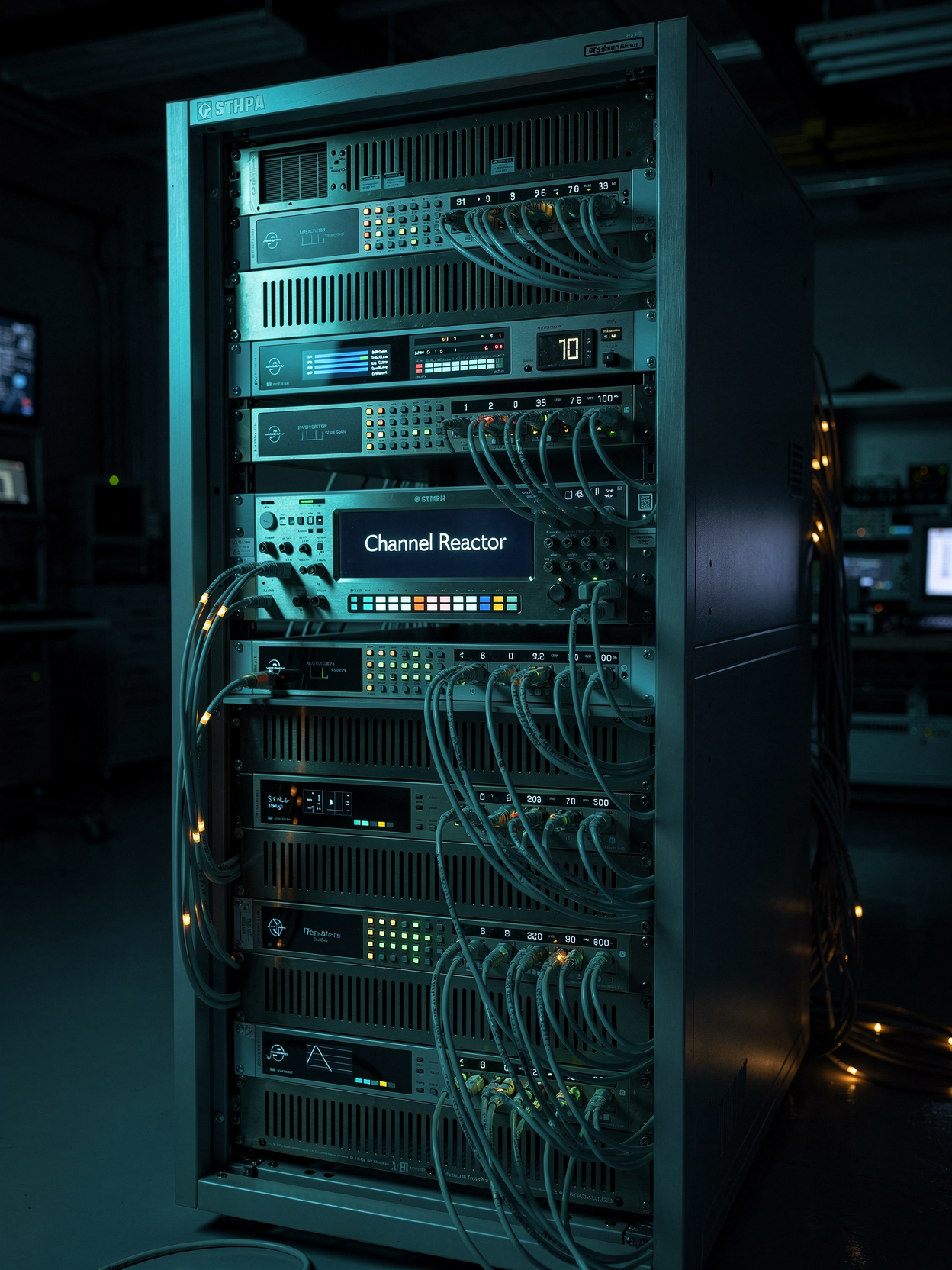
Why Channel Reactor Matters
RF-enabled systems are often forced to answer critical integration questions too late—during incomplete hardware bring-up, limited live-range access, or expensive field events. Channel Reactor closes that gap by giving engineering and program teams a controlled environment to evaluate realistic RF behavior earlier, when issues are faster and less expensive to fix.
- Identify integration risks before flight tests, field exercises, or full platform deployment
- Validate waveforms, sensing behavior, and RF interactions in a controlled lab environment
- Shorten development timelines by discovering issues earlier in the integration cycle
- Reduce dependence on expensive field testing, weather-limited events, and one-off integration setups
What Makes Channel Reactor Different?
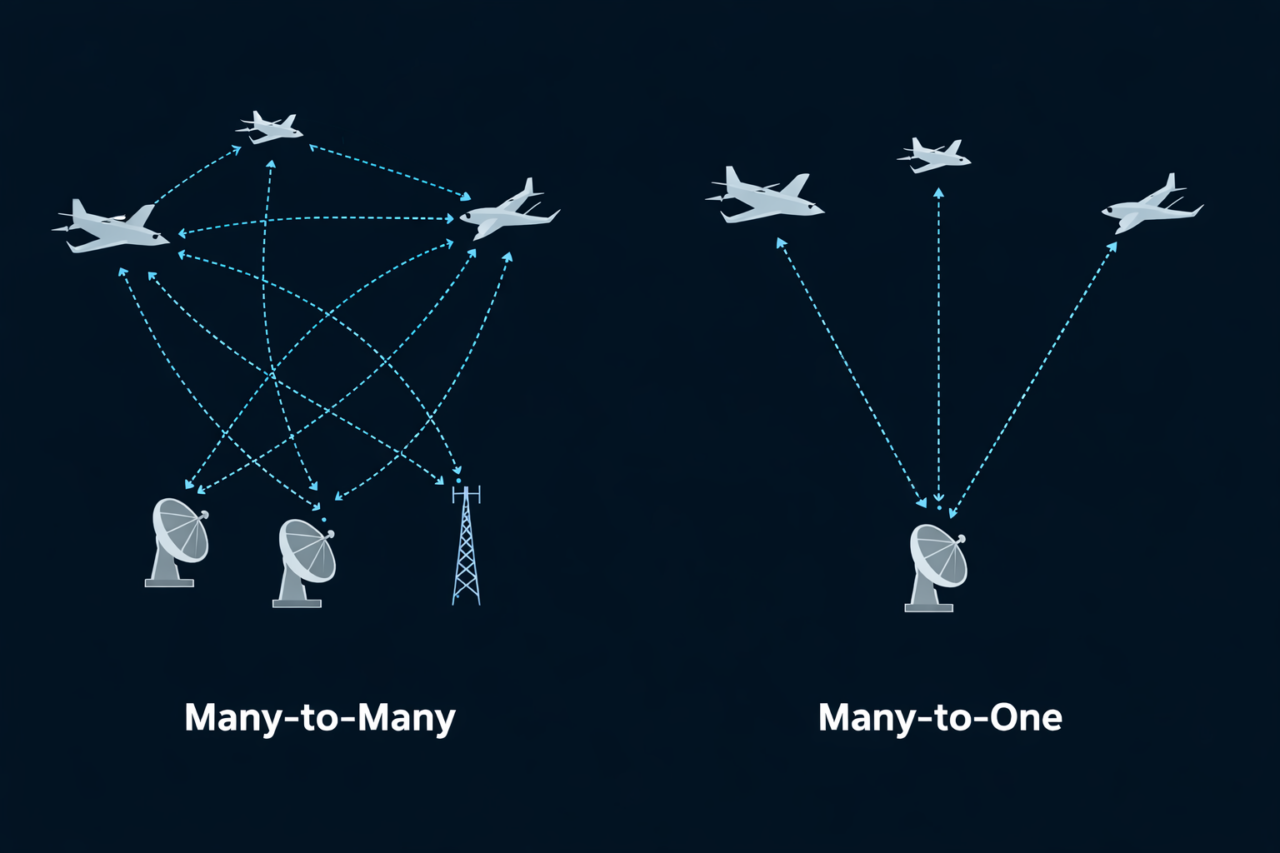
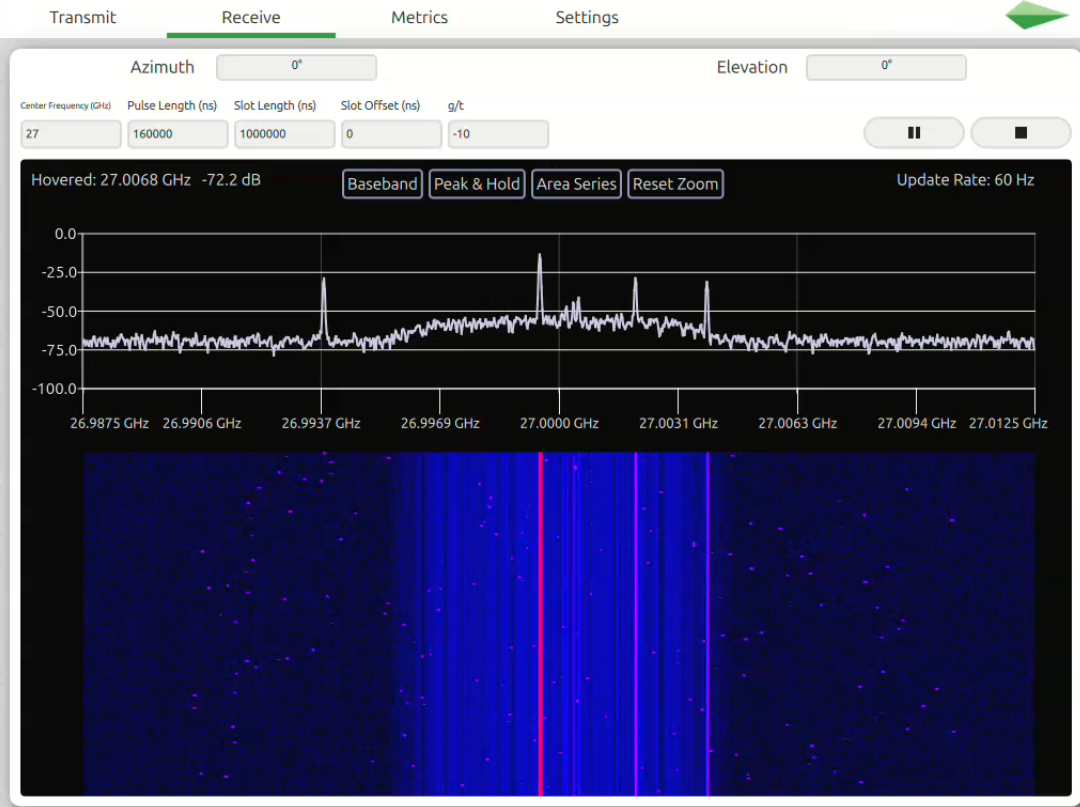
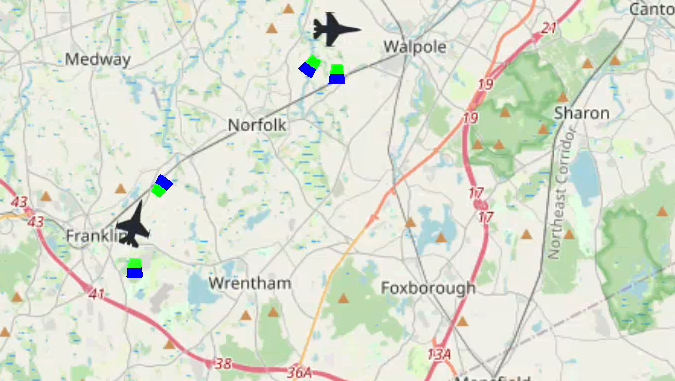
Channel Reactor supports many-to-many interactions in real time while most RF simulation approaches model many transmitters and a single receiver at a time. This key capability enables testing and evaluation of RF networks and complex threats/detectors because simulated participants can respond to one another inside the scenario, allowing teams to evaluate more realistic behaviors than static lab setups can support.
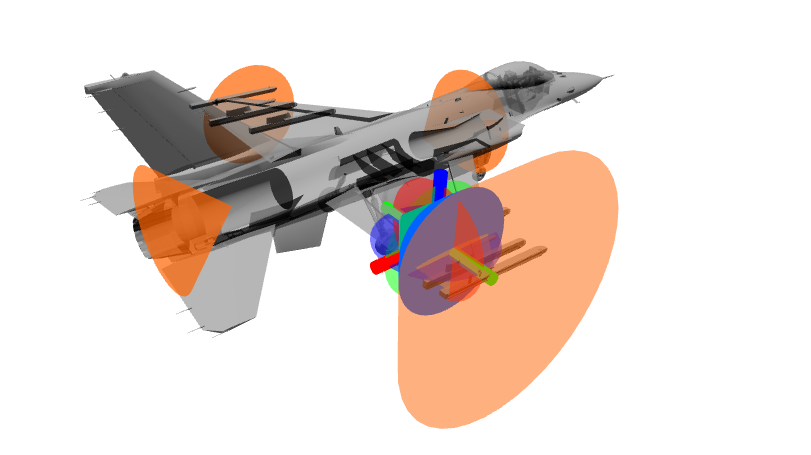
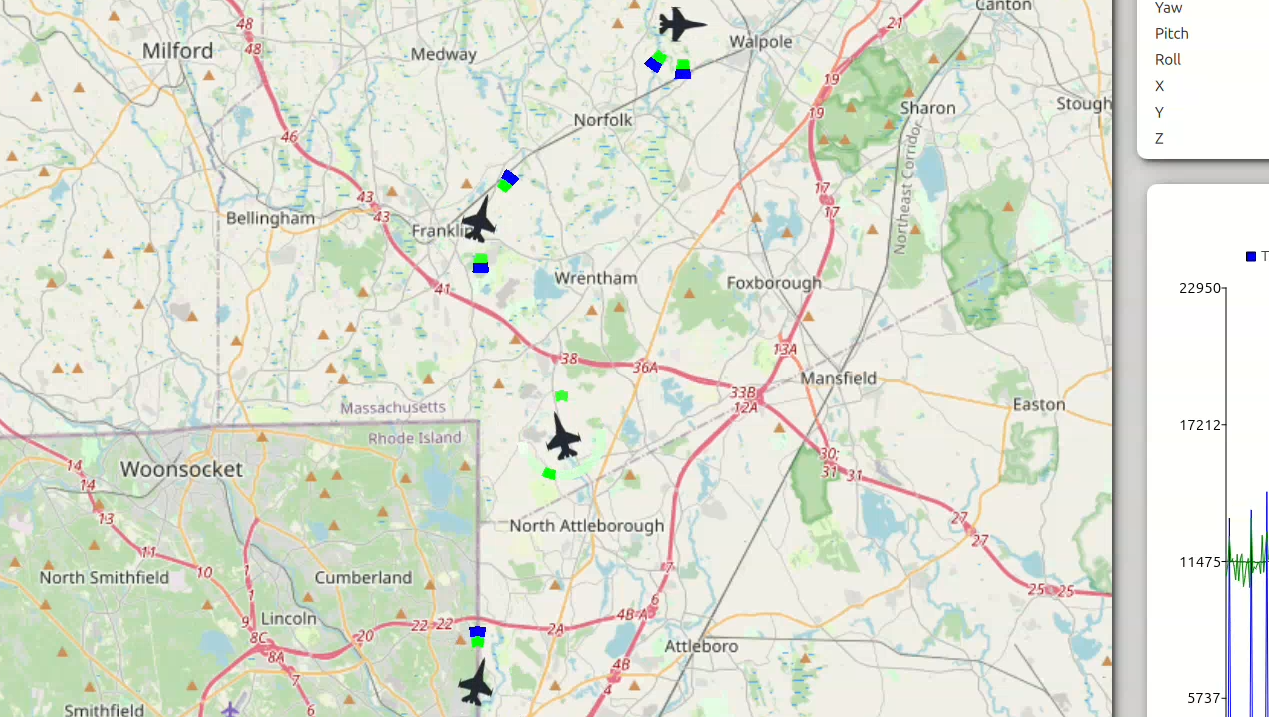
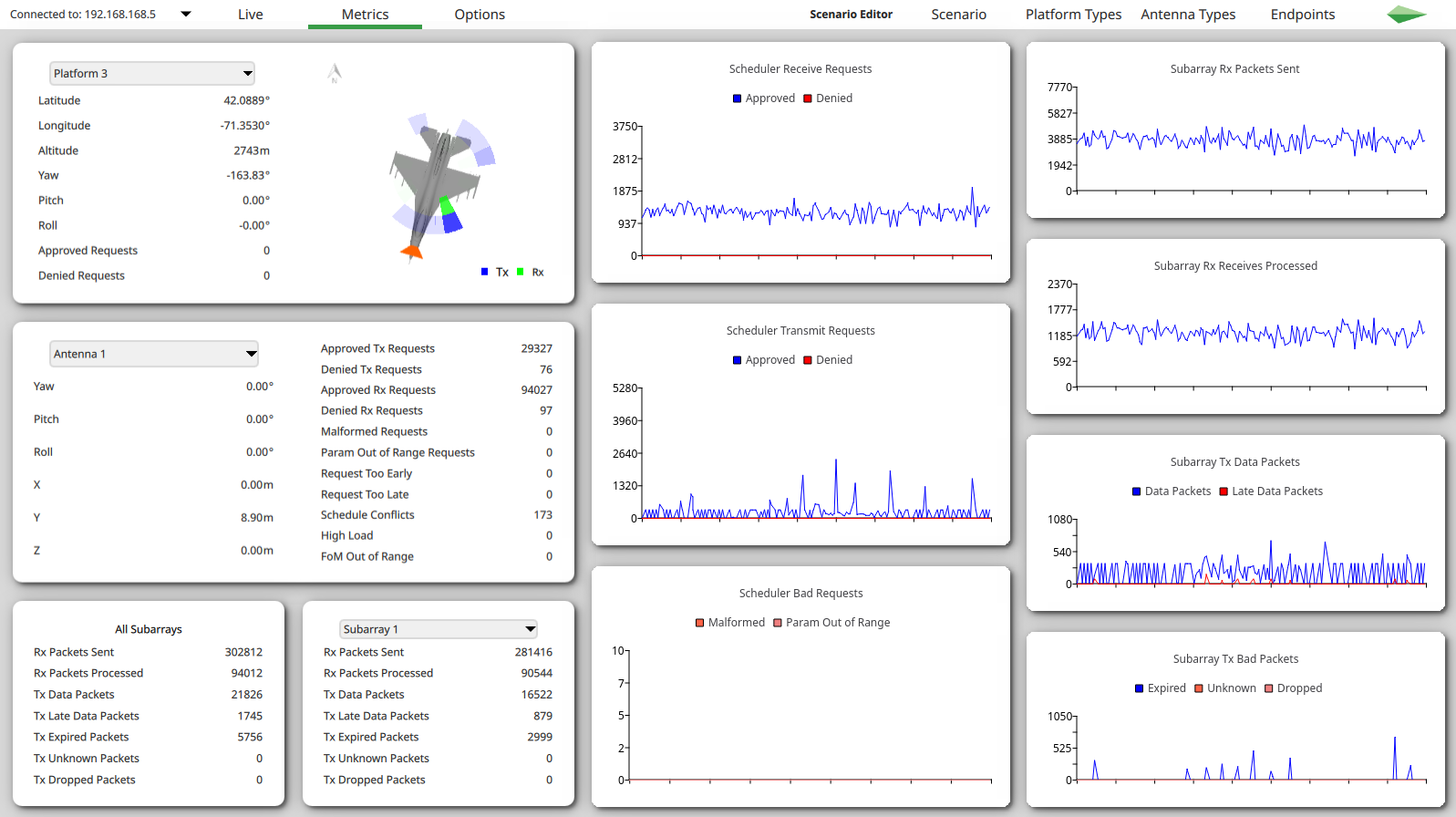
Channel Reactor simulates of advanced antenna capabilities (e.g., scheduling and antenna sharing), and platform navigation inputs such that RF capabilities under test experience the simulated world as though they were actually in flight.
What Channel Reactor Models and Enables
Core capabilities
- Phase-accurate simulation
- Antenna modeling and control
- Scenario integration and control
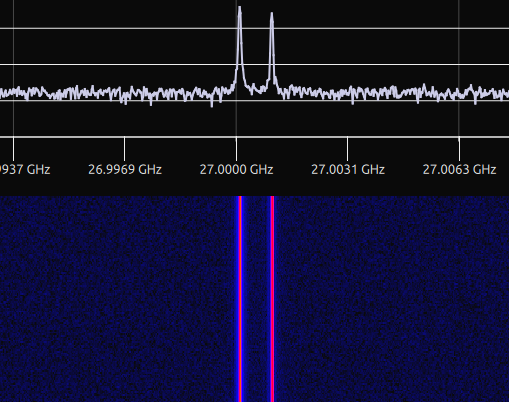
- Pulsed and continuous signals
- Wideband signal support and dynamic resampling
- Scalable hardware footprint aligned to customer requirements
- Integration with live RF hardware and digital RF interfaces
Representative channel effects
- Free-space path loss
- Doppler shift
- Propagation delay
- Atmospheric attenuation
- Thermal noise
- Interference, including intentional interference modeling as configured
Who Uses Channel Reactor
Waveform and protocol developers
Validate algorithms and protocol behavior under realistic channel effects before repeated field testing. Find integration issues in the lab before they become field surprises.
Integration labs and test teams
Assess end-to-end RF interactions, system behavior, and integration readiness with more realism and repeatability than static bench setups alone.
Antenna and payload designers
Test antenna control logic, scheduling behavior, and payload interactions inside a real-time emulation environment before committing to expensive flight hours.
Interfaces and Integration Fit
Channel Reactor is designed to align with customer lab environments and program-specific digital RF integration needs. Interface selections and integration methods are scoped based on existing hardware, scenario requirements, and customer constraints.
- Government-standard digital RF interfaces, as applicable
- Network transport and integration paths aligned to lab architecture
- Configuration-specific interface support based on program needs
How Engagements Work
Start with a focused technical conversation about your requirements, constraints, and the RF behaviors you need to evaluate. EFI then scopes the right configuration, scenario approach, and support model for your use case.
Channel Reactor can be delivered with configuration, integration support, and follow-on expansion as requirements evolve.
- Technical conversation — requirements, constraints, integration goals
- Scope and configure — define the right setup for the use case
- Deliver and support — configure, integrate, and expand as needed
Start a technical conversation about your lab environment, integration constraints, and the RF behaviors you need to evaluate.
Visit Us
2860 NE Rivergate St., Suite 1, McMinnville, Oregon
Discuss your RF simulation and integration needs
By submitting, you agree to our Terms & Privacy.